Bone density after 50: what to know before a fracture
Bones thin quietly with age and after menopause. A guide to who should ask a GP about a scan, what Medicare covers and what helps day to day.
Osteoporosis usually has no symptoms until a bone breaks. There is no ache as bone thins, which is why Healthy Bones Australia calls it the “silent disease”. The first sign is often a fracture after a minor trip or fall, typically at the hip, wrist or spine. Fractures in the spine can show up as lost height or a change in posture.
Because nothing announces it, bone health after 50 comes down to knowing your risk factors and raising them with a GP.
How common thin bones are
The headline figures from Healthy Bones Australia are estimates. The organisation puts the number of Australians with osteoporosis at 1.2 million, with a further 6.3 million having low bone density, known as osteopenia. Among people aged 50 and over, it reports that 66% have one or the other. It attributes more than 183,000 broken bones a year to poor bone health.
Men are not exempt. Healthy Bones Australia’s risk factors page says up to 25% of cases are in men.
Why bone thins with age and after menopause
Healthy Bones Australia explains osteoporosis as bones losing minerals, such as calcium, more quickly than the body can replace them. The organisation’s calcium page describes bones as a calcium bank. When the diet does not supply enough, the body withdraws what it needs from bone. In older adults calcium is absorbed less effectively from the intestine and more is lost through the kidneys, so the account is harder to keep in credit.
For women, menopause adds a hormonal change. Victoria’s Better Health Channel explains that oestrogen levels drop as menopause approaches, and bone density starts to fall with them. The decline continues afterwards. On average, women lose up to 10% of their bone density in the first five years after menopause. Most women reach menopause between 45 and 55, and the average age in Australia is 51 to 52.
Who should talk to a GP
Healthy Bones Australia is clear on one point: anyone over 50 who breaks a bone after a minor bump or fall should be investigated for osteoporosis. It also says women and men over 50 who have risk factors need a bone check-up.
The risk factors it lists include:
- a parent or sibling with osteoporosis, a fracture from a minor fall, or rapid height loss
- early menopause in women, or low testosterone in men
- coeliac disease and other conditions that affect absorption, an overactive thyroid or parathyroid, rheumatoid arthritis, diabetes, and chronic liver or kidney disease
- corticosteroid medicines, certain breast cancer or prostate cancer treatments, and some epilepsy, antidepressant or HIV treatments
- low levels of physical activity, smoking and excessive alcohol intake
- a thin body build.
A GP weighs these up before deciding whether a scan is needed.
The scan, and what Medicare covers
Osteoporosis is diagnosed with a bone density scan, usually called a DXA or DEXA scan. Healthy Bones Australia’s diagnosis page describes it as quick and painless. You lie clothed on a padded table while the arm of the machine passes over you, measuring density at the hip and spine. It takes about 10 to 15 minutes. The radiation dose is very low, much less than a standard X-ray, and a referral from a GP or specialist is required.
The result is reported as a T-score. A score between −1 and −2.5 indicates osteopenia. A score of −2.5 or lower indicates osteoporosis, at which point a doctor will usually discuss treatment and follow-up scans every one to two years.
According to Healthy Bones Australia, Medicare rebates for a bone density scan apply to:
- people aged 70 or over
- people with diagnosed osteoporosis
- anyone who has had one or more fractures from a minor incident
- people using corticosteroids
- women with early menopause and men with low testosterone
- people with coeliac disease or other malabsorption conditions, overactive thyroid or parathyroid conditions, rheumatoid arthritis, or liver or kidney disease.
Where no rebate applies, the scan can still be done but is paid for directly. Healthy Bones Australia also cautions that heel ultrasound tests offered in some pharmacies and shopping centres are not the recommended standard test.
Calcium, from food first
Healthy Bones Australia names three things bones need: calcium, vitamin D and exercise. On calcium, the recommended intake is 1,000 mg a day for adults, rising to 1,300 mg for women over 50 and men over 70. Half of Australian adults do not reach their recommended intake.
The organisation says a calcium-rich diet is the best way to get there. Dairy foods head its table of examples, at 150 to 305 mg per serve of milk, cheese or yoghurt. Canned sardines and salmon are on the list too, along with calcium-set tofu, almonds and green vegetables such as kale, bok choy and broccoli. More is not better: Healthy Bones Australia states that excessive calcium intake is not recommended.
Vitamin D and sensible sun
Vitamin D is needed to absorb calcium from the intestine. In Australia the main source is sunlight on skin, according to Healthy Bones Australia’s vitamin D page. Food contributes only small amounts, from egg yolks and oily fish such as salmon and mackerel.
How much sun is enough depends on the season, where in Australia you live, your skin type and how much skin is exposed. Healthy Bones Australia stresses that sun exposure for vitamin D has to be balanced with skin protection, which is needed when the UV Index is 3 or above.
Low vitamin D is common. The organisation says more than 30% of Australian adults have a mild, moderate or severe deficiency. A GP can order a blood test for people at risk, such as those who spend most of their time indoors or have naturally dark skin.
Exercise that loads bone
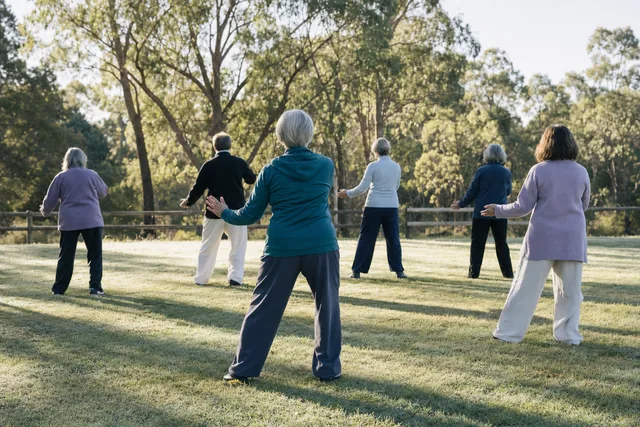
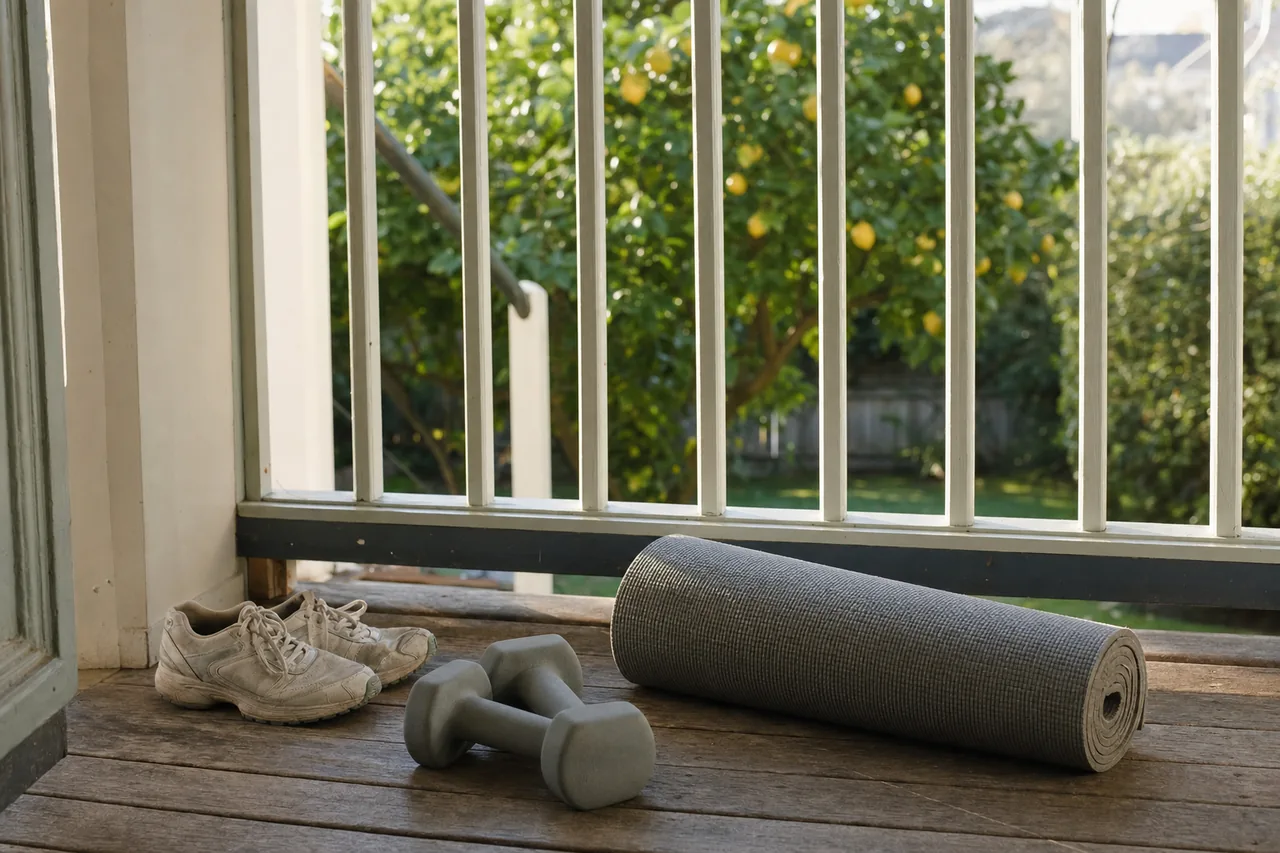
Not all exercise does much for bone. Healthy Bones Australia’s exercise page says bones benefit most from controlled impact and muscle loading, and recommends combining three kinds of activity:
- Weight-bearing impact exercise, done on your feet with firm landings: jogging, skipping, stair climbing, dancing.
- Resistance training, moving weights with the load increased gradually over time.
- Balance training, such as standing on one leg, standing heel-to-toe and stepping over obstacles.
Balance work earns its place because falls so often lead to fractures. About a third of people over 65 fall each year, and half of all falls happen around the home.
Anyone who already has osteoporosis, or has had a fracture, is encouraged to exercise under the guidance of a physiotherapist or exercise physiologist, who can adapt a program around other conditions. Healthy Bones Australia’s advice is to start at your own capacity and build from there.
Sources
- Healthy Bones Australia, About osteoporosis.
- Healthy Bones Australia, Osteoporosis risk factors.
- Healthy Bones Australia, Diagnosis: DEXA scan, bone density scan.
- Healthy Bones Australia, Calcium and bone health.
- Healthy Bones Australia, Vitamin D and bone health.
- Healthy Bones Australia, Exercise and bone health.
- Better Health Channel (Victorian Department of Health), Menopause and osteoporosis.