Why losing weight gets harder after 45
Same meals, same walk, different result. What changes in muscle, daily movement, sleep and fat storage through midlife.
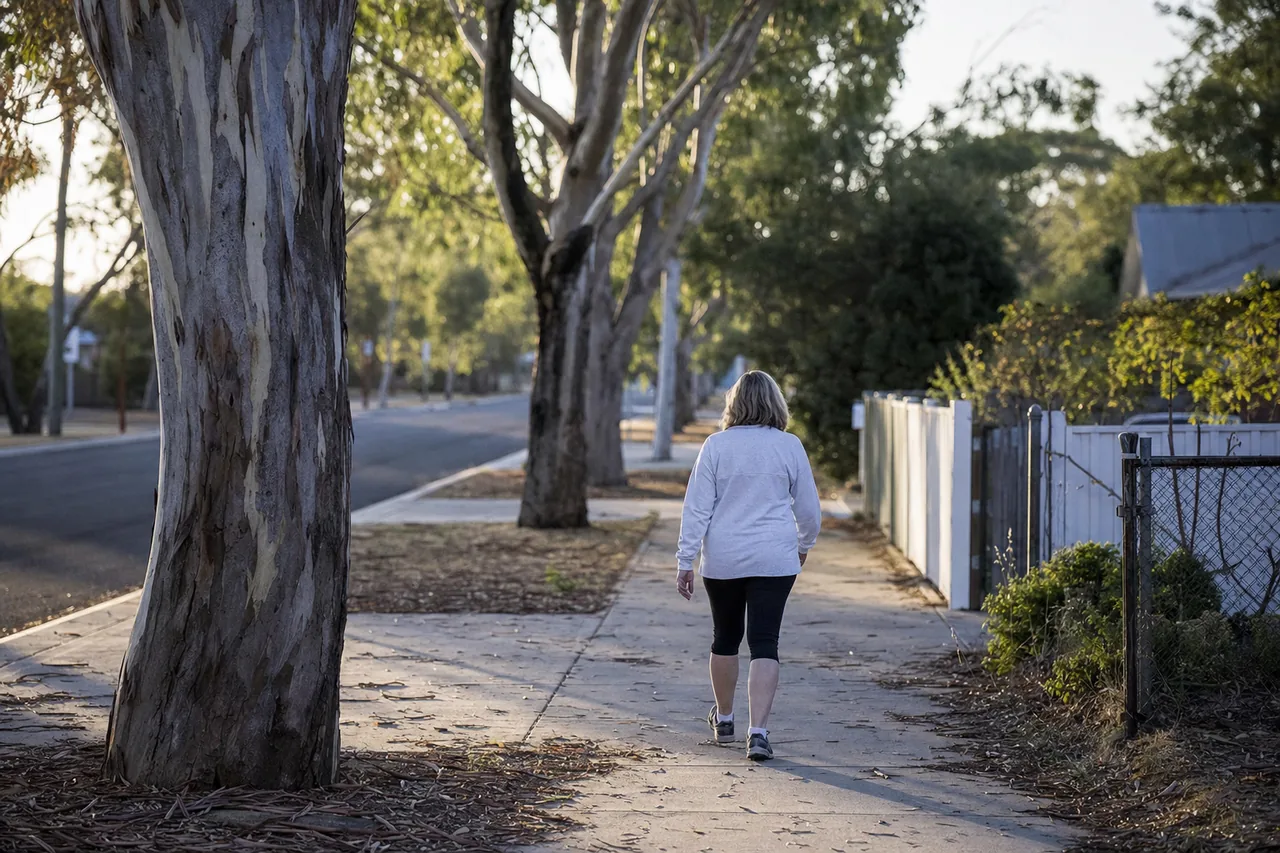
The dinner plate looks much as it did twenty years ago. The walk around the block still takes forty minutes. Yet the belt that sat comfortably at 35 needs another notch at 50, and the couple of kilos that used to come off after a careful fortnight now stay where they are. The national figures suggest the pattern is real.
When the Australian Bureau of Statistics measured adults for its 2022 National Health Survey, 58.3% of women aged 35 to 44 were in the overweight or obese range by body mass index. Among women aged 45 to 54 it was 67.3%, and among those aged 55 to 64 it was 69.5%. Men started higher and kept climbing, from 74.8% to 77.9% and then 78.1%. A survey like this compares different people at each age and does not follow the same people over time, but the direction is hard to miss.
No single cause explains it. Several things shift in the same decade.
Muscle goes first, and quietly
According to Healthdirect, the body starts to lose muscle slowly from around the age of 30 and more quickly after 50. In women the loss speeds up with menopause. None of this shows on the bathroom scales, which cannot tell a kilo of muscle from a kilo of fat.
It matters for weight because muscle is working tissue. Jean Hailes for Women's Health makes the point plainly: the more muscle mass a person has, the more energy the body burns. With less muscle, the same meals leave a little more energy unspent.
Age is only part of the reason. Victoria's Better Health Channel says at least half of the age-related changes to muscles, bones and joints are caused by disuse. A second ABS release from the same survey, on physical activity, shows how common disuse is. Of 18 to 24-year-olds, 36.0% had done strength or toning exercise on two or more days in the week before they were interviewed. Among people aged 45 to 54 the figure was 21.0%, and at 55 to 64 it was 19.9%.
Dieting can add to the problem. Healthdirect notes that when people lose weight they are likely to lose muscle as well as fat. Someone who cuts back on food without doing any strength work may end up lighter, but also with less muscle than they started with.
The movement nobody counts
The planned walk is easy to keep track of. The rest of the day is harder to see: the stairs, the standing, the carrying, the job that once kept you on your feet. The ABS does not count trips to the clothesline, but it does ask employed adults to describe a typical work day. Among 18 to 24-year-olds, 22.8% said they were mostly sitting. Among those aged 45 to 54 it was 52.9%.
Total activity slips as well. In the same survey, 80.5% of 18 to 24-year-olds had done at least 150 minutes of physical activity in the previous week, compared with 68.4% of people aged 55 to 64. Jean Hailes points to some of the midlife reasons: changes at work and at home, caring for ageing parents and children at once, and aches and pains that make moving less appealing. Later on, the Sleep Health Foundation observes, retirement and an emptier house can mean less activity again.
Sleep gets lighter
After middle age the body clock gradually changes, the Sleep Health Foundation says. Older adults tend to take longer to fall asleep and to wake more often during the night than they did when younger. For women after menopause, hot flushes can add further waking.
Poor sleep and weight are connected. The foundation's fact sheet on obesity and sleep reports good evidence, from many studies, that sleeping less than seven hours a night is associated with a higher risk of obesity. Short sleep disrupts the hormones that regulate food intake. It also leaves people more fatigued, which reduces the motivation to exercise and to choose food well. The same fact sheet notes that weight loss is harder to achieve for people who report short sleep.
For women, fat moves to the middle
The average age of menopause in Australia is 51, according to Jean Hailes, which places it squarely in the decade when weight tends to creep. Jean Hailes cites research suggesting that women gain roughly half a kilo a year between 45 and 55. The hormonal changes of menopause are not the main reason for the gain. Ageing, falling muscle mass, genetics and a crowded stage of life do more of that work.
What the hormones do change is where the weight sits. Before menopause, women often carry fat on the hips and thighs. As oestrogen falls, storage tends to shift to the waist. The ABS figures show the result. Among women aged 35 to 44, 67.7% had a waist measurement of 80 centimetres or more, the point at which the risk of chronic disease is considered to be increased. Among women aged 45 to 54 it was 79.0%, and at 55 to 64 it was 83.2%.
The shift matters for health. Jean Hailes notes that studies link too much abdominal fat with a higher risk of heart disease and type 2 diabetes.
What still helps
The list is long, but much of it is open to change. The Better Health Channel says older people can increase muscle mass and strength through muscle-strengthening activities, and that it is never too late to become more active.
The Australian physical activity guidelines, as the ABS summarises them, ask adults aged 18 to 64 to do strength or toning activities on two or more days a week, alongside 150 to 300 minutes of moderate activity. Strength work in that definition includes lifting weights, resistance training, yoga and pilates. For anyone trying to lose weight, Healthdirect adds a caution: eat enough protein and keep exercising, so that muscle is not lost along with the fat.
Everyday movement is worth rebuilding on purpose. Healthdirect says regular exercise is especially important for people who spend a lot of time sitting, such as those at a desk for several hours a day.
A GP is also the person to see before starting a new exercise program after a long break, a step the Better Health Channel recommends, and when strength seems to be fading. Healthdirect is firm on that point: fading strength should not simply be put down to age. On weight itself, Jean Hailes suggests acting early, when the gain is still two, three or four kilograms.
None of this makes midlife arithmetic kinder. It does explain why what worked at 35 gives a different answer at 50, and why effort now has to go into things that once looked after themselves.
Sources
- Australian Bureau of Statistics, Waist circumference and BMI, 2022.
- Australian Bureau of Statistics, Physical activity, 2022.
- Healthdirect, Loss of muscle mass (sarcopenia).
- Better Health Channel, Ageing - muscles bones and joints.
- Jean Hailes for Women's Health, Weight gain at menopause: Are hormones to blame?
- Sleep Health Foundation, Ageing & Sleep.
- Sleep Health Foundation, Obesity and Sleep.