What a tape measure tells you that the scales cannot
By BMI, men in midlife look worse off than women. By waist measurement it is the other way around. Why the two numbers differ.
Among Australian men aged 45 to 54, 77.9% are overweight or obese when their height and weight are measured. For women of the same age the figure is 67.3%. The gap holds in every older age group in the Australian Bureau of Statistics National Health Survey of 2022: 78.1% of men and 69.5% of women at 55 to 64, 81.4% and 69.4% at 65 to 74, and 74.2% and 65.7% at 75 and over.
The same survey put a tape measure around people's waists, and that number tells a different story. At 45 to 54, 79.0% of women had a waist measurement in the increased-risk range, compared with 70.2% of men. Women stayed ahead in every older age group, by 83.2% to 76.4% at 55 to 64. Judged by body mass index, men in midlife look worse off. Judged by the tape, women do.
One caution: not everyone agreed to be measured, and for 39.4% of adults the ABS imputed the waist figure.
Why the two numbers disagree
BMI is weight in kilograms divided by height in metres squared. A result of 25.0 to 29.9 is classed as overweight and 30 or more as obese. It is quick, and useful for tracking a whole population, which is why the ABS reports it. Its weakness is that it treats every kilogram alike. As Healthdirect explains, the calculation cannot tell how much of a person's weight is fat and how much is muscle. Nor does it say where the fat is.
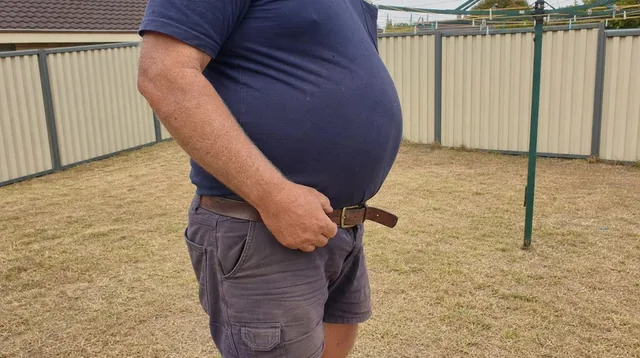
Location matters. Fat stored around the middle includes visceral fat, the kind that sits around the internal organs. The Heart Foundation describes waist measurement as an indicator of the fat deposits that coat the heart, kidneys, liver, digestive organs and pancreas, which can raise the risk of heart disease and stroke. Healthdirect adds type 2 diabetes and some cancers to the conditions linked with too much visceral fat. Fat carried mainly on the hips and buttocks does not appear to carry the same risk, according to Victoria's Better Health Channel, which states its position without hedging.
Your waist circumference is a better predictor of health risk than your BMI.
The Better Health Channel also ranks the combinations. A slim person with a pot belly sits in a higher risk group than an overweight person without one. That is the case the scales miss.
How to measure your waist
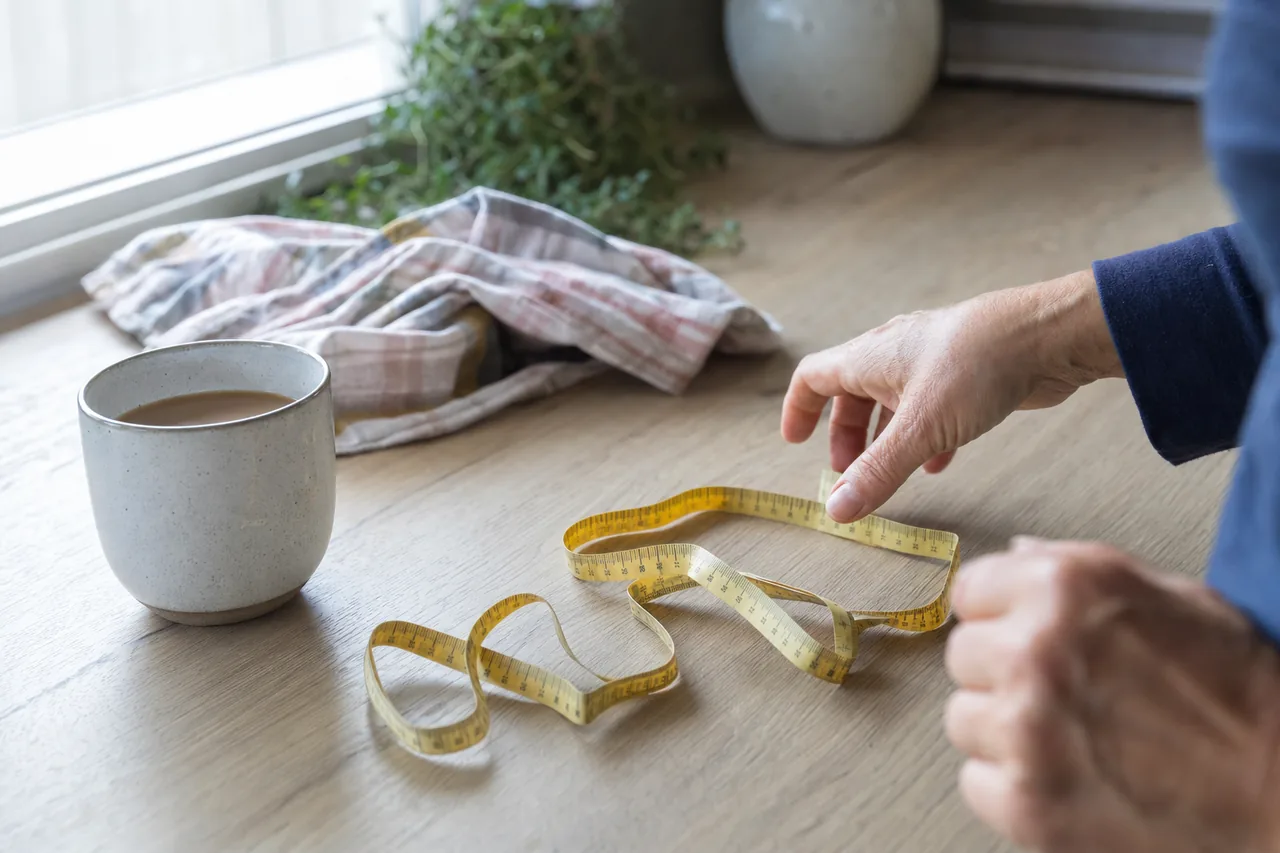
All it takes is a flexible tape measure. The steps below combine the instructions given by the Heart Foundation and Healthdirect.
- Measure against bare skin, or over no more than one layer of light clothing.
- Find the top of your hip bone and the bottom of your ribs. The tape goes midway between the two, roughly in line with your belly button.
- Breathe out normally. Do not hold your breath or pull your stomach in.
- Wrap the tape around so that it is snug without squeezing the skin. The Heart Foundation's test is that one finger should still fit under it.
- Read the number and write it down with the date.
The midpoint is not necessarily where a belt or waistband sits, so a trouser size is no substitute for the tape.
The Australian thresholds
Healthdirect, the Better Health Channel and the ABS use the same cut-off points for adults: 80 cm and 88 cm for women, 94 cm and 102 cm for men.
In the 2022 survey the average waist was 91.0 cm for women and 99.3 cm for men, so the average adult of either sex is already past the first threshold. Overall, 67.9% of adults were in the increased-risk range, up from 62.9% in 2011–12.
The thresholds have limits. They apply only to adults, and not during pregnancy or where a medical condition has enlarged the abdomen. The Heart Foundation says waist circumference is less accurate for some groups, including Aboriginal and Torres Strait Islander peoples and South Asian, Chinese and Japanese adults. Healthdirect notes that the measurement can be less reliable in people already living with overweight or obesity. A number above the line is a prompt to talk with a GP about overall risk. It is not a diagnosis.
What BMI misses after 65
BMI becomes a blunter tool with age, and in two directions at once.
First, it can understate body fat. The Better Health Channel lists older people among the groups for whom BMI underestimates fat, because the calculation cannot separate fat from muscle. An older person may weigh what they did years earlier while carrying less muscle and more fat.
Second, the standard healthy range of 18.5 to 24.9 may be set too low for later life. The Better Health Channel says that for Australians over 70, general health may be more important than being mildly overweight, and that some researchers suggest a BMI of 22 to 26 is desirable at that age. A meta-analysis by Victorian researchers in The Journal of Nutrition, Health and Aging pooled eight studies covering 370,416 people. In those aged 65 and over, the risk of death rose once BMI fell below 22 and did not rise significantly at BMIs above 23. The authors concluded that the usual range suits younger and middle-aged adults, and that a higher one should be recommended for older adults.
A 2023 study in Scientific Reports followed 18,209 generally healthy people with an average age of 75, most of them Australian, for a median of 6.9 years. Men with a BMI of 25.0 to 29.9 had the lowest risk of death, and men with a BMI under 21 the highest. In this older group, waist circumference on its own had little association with the risk of death. The authors note that their participants were health-conscious trial volunteers, and that overweight and obesity have other health consequences.
These findings are a reason for caution, not a licence. For people in their forties, fifties and early sixties, the standard BMI range and the waist thresholds remain the reference points. Past 70, a BMI in the overweight band means less than it once did, and being underweight carries a risk of its own. A plan to lose weight deliberately at that age is worth discussing with a GP first.
Using both numbers
The Better Health Channel recommends combining the two: BMI for a rough reading of overall weight, and waist for where the weight sits.
Healthdirect's advice is to focus on behaviour and health more than on a target weight. It notes that losing as little as 5% of body weight, which is 5 kg for someone who weighs 100 kg, brings health benefits.
The practical step is small. Take the measurement, note the date, and bring the number to the next GP appointment, where it can be read alongside blood pressure and cholesterol.
Sources
- Australian Bureau of Statistics, Waist circumference and BMI, 2022.
- Healthdirect, Body mass index (BMI) and waist circumference.
- Heart Foundation, What waist measurements mean for your heart.
- Better Health Channel, Body mass index (BMI).
- Winter JE, MacInnis RJ, Nowson CA, The Journal of Nutrition, Health and Aging, The influence of age on the BMI and all-cause mortality association: A meta-analysis.
- Carr PR and colleagues, Scientific Reports (2023), Associations of body size with all-cause and cause-specific mortality in healthy older adults.